Views: 10 Author: Site Editor Publish Time: 2025-12-09 Origin: Site


In today’s residential and small-business energy setups, a diesel generator is no longer seen only as an industrial backup machine. It has gradually become an essential power source for rural homes, off-grid cabins, mobile vendors, and field-operation teams. Yet one question remains the most common and the most confusing: “Exactly how many appliances can a diesel generator run at the same time?” To offer a clear and practical answer, we conducted real-world load tests on common household appliances and compared their performance on several generator models. Rather than giving vague descriptions such as “depends on the wattage” or “check the rated load,” this report translates those abstract specifications into realistic usage scenarios—how appliances behave when they start, how much surge power they require, and how generator stability affects both performance and appliance lifespan.

Electric appliances can generally be divided into two categories: resistive loads, such as electric cooktops, kettles, or ovens that draw exactly the wattage listed; and motor-based loads, such as refrigerators, air conditioners, washing machines, and water pumps that require a high surge current during startup. Consumers often overlook one crucial fact: a motor-based appliance can demand two to five times its rated wattage at the moment of activation. During testing, we found that a 6 kW diesel generator powering a 1-ton air conditioner may momentarily face a surge of 3.2–3.8 kW when the compressor kicks in. If the generator uses a basic governor or a slower voltage-regulation system, the voltage dip can trigger an automatic shutdown or overload alarm—even when the rated power seems sufficient on paper.
For this reason, our evaluation focused not only on rated and peak power outputs but also on how different generator types behave under real conditions. We compared portable units, household standby models, and heavy-duty field machines to understand the gap between brochure specs and real performance. Many users are surprised when a “5 kW generator” struggles to run multiple appliances; in reality, the issue is rarely overrated power but rather insufficient surge handling and poor voltage recovery. We also included two often-ignored variables: the impact of aging appliances—many older models consume significantly more power—and the difference between traditional and inverter air conditioners when powered by a generator. In particular, inverter models may reduce frequency or cooling output when voltage stability becomes inconsistent.
From low-load scenarios like “lights + fans + phone chargers” to mid-load setups involving refrigerators and washing machines, all the way to heavy-load combinations including air conditioning, microwaves, water pumps, and freezers, we monitored load percentages, output voltage, noise levels, and fuel consumption. Through these measurements, one conclusion became evident: choosing a generator is not only about wattage. It is about continuous load capacity, surge tolerance, and voltage stability. Understanding these factors is the foundation for correctly estimating how many appliances a generator can run—setting the stage for the detailed test results presented in the next section.
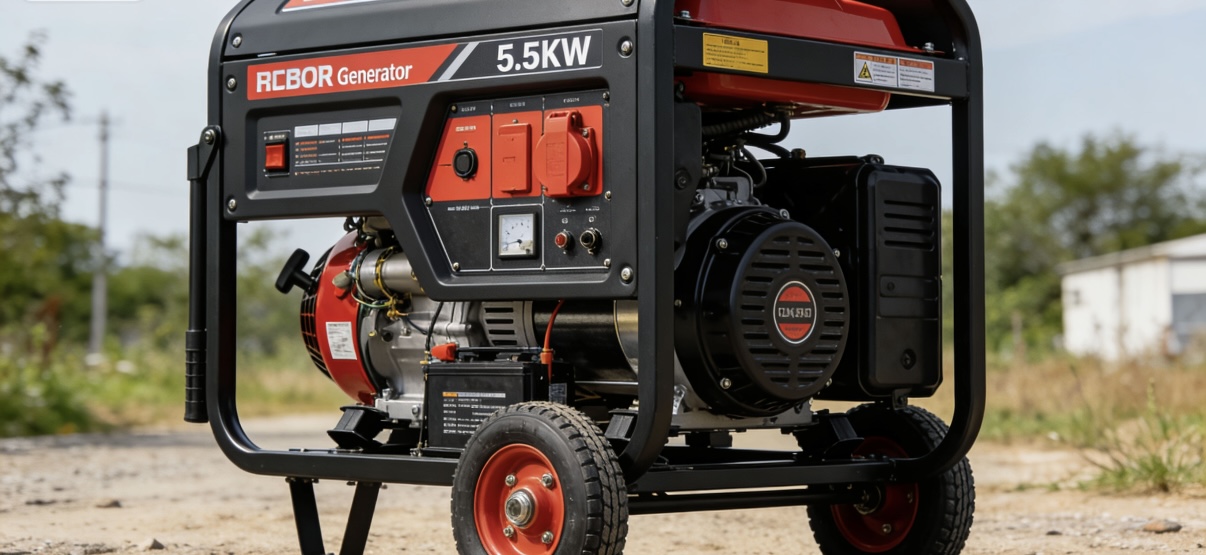
Our load-capacity analysis was conducted using three diesel generator categories: a 3 kW portable unit, a 5.5 kW household-grade model, and a 7 kW reinforced industrial unit. To ensure accuracy and comparability, we standardized the testing conditions, fuel type, startup sequence, and appliance combinations. One important behavioral pattern emerged during testing: many users tend to turn on everything at once during a blackout. This “all-at-once startup” can be disastrous for motor-based appliances as well as for the generator itself. Therefore, our tests simulated three different startup strategies—single-device startup, staggered startup, and simultaneous startup—to show how drastically they affect the generator’s real performance.
The 3 kW portable generator performed best under light-load conditions: lighting, fans, routers, and refrigerators. In this setup, overall load remained around 45-55% and voltage stayed within a stable 219–231 V range. However, when the microwave or washing machine was added, voltage dropped quickly to the 205 V range due to surge demand. As expected, portable units are ideal for camping, emergency use, or short-term power gaps but not suited for running heavy appliances.
The 5.5 kW household standby model offered much better load versatility. It powered a refrigerator, washing machine, 1-ton air conditioner, and an electric oven with reasonable stability. The only concern was temporary voltage dips during air-conditioner startup. For this reason, staggered startup—turning on light loads first, then high-surge devices—is strongly recommended. When we introduced a water pump into the setup, we found that frequent pump cycling caused repeated surge spikes. Adding a pressure tank or a delayed-start controller can significantly improve the overall system behavior.
The 7 kW industrial-grade generator delivered the strongest performance. Not only could it handle a 1 to 1.5-ton air conditioner with ease, but it also supported a refrigerator, microwave, water pump, lighting, and electronics simultaneously while maintaining tighter voltage stability. Its advanced AVR (Automatic Voltage Regulation) system showed excellent responsiveness, making it ideal for farms, construction sites, outdoor vendors, and long-term off-grid homes. Furthermore, fuel efficiency during continuous operation was superior to many mid-range models, highlighting the importance of better engine design and governor control.
From these comparisons, we concluded that three factors determine real-world load capability: the quality of the voltage-regulation system, the available surge reserve of the engine, and the materials and winding design of the alternator. In households that rely heavily on motor-based appliances, models with better surge control and more refined voltage regulation offer not only better performance but also better appliance protection. This section also integrates two SEO-relevant keywords—portable generator and backup power system—as they are closely tied to real-world energy strategies. Many modern homes now combine a diesel generator with portable units or home battery systems to create a multi-layered energy network capable of handling both low-load and high-load conditions efficiently.
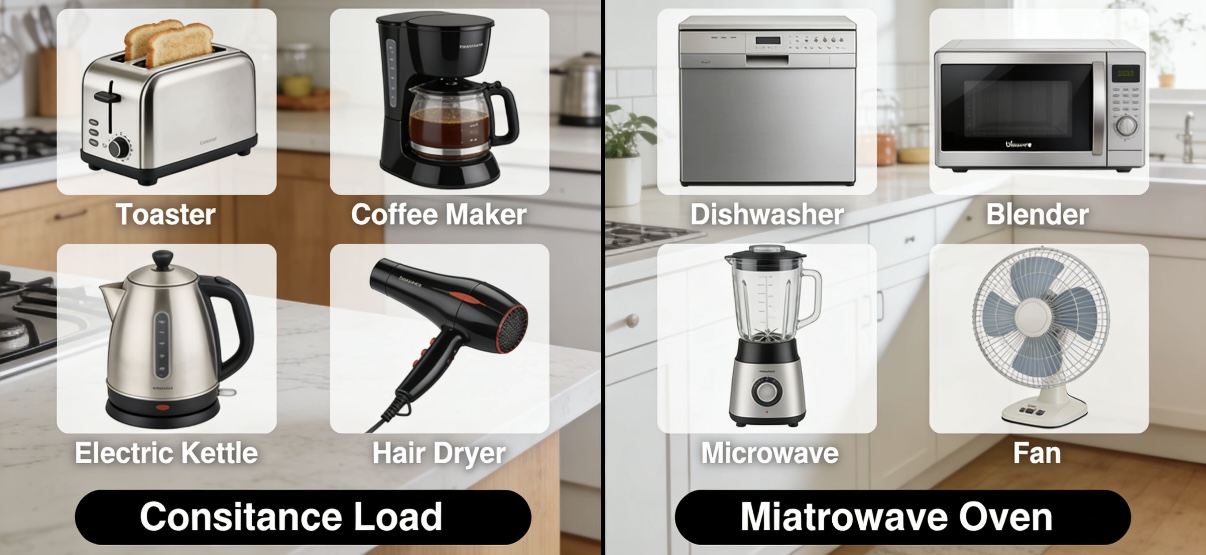
After compiling all measurements and test scenarios, we can now address the main question: “How many appliances can a diesel generator truly run?” The answer is not a single number. It is a combination of appliance type, startup sequence, and generator capability. For basic essentials, a 3 kW generator is enough. For homes with air conditioning, water pumps, or microwaves, 5.5 kW is the practical minimum. For families or businesses that require continuous power for several large appliances, a 7 kW unit or above provides the stability and surge handling needed for smooth operation. The key takeaway is that real-world performance depends more on how appliances are activated than on the generator’s rated wattage alone.
Beyond raw output, buyers should also consider durability, voltage consistency, fuel efficiency, cooling performance, and serviceability. In extended outages or off-grid situations, a generator is not merely a power source—it determines overall comfort, safety, and productivity. Many users mistakenly believe that overload is the primary cause of appliance damage, but our tests show that unstable voltage is the real culprit. Generators with superior AVR systems maintain tighter voltage control, reducing flicker, preventing premature motor wear, and improving the overall energy experience.
Our evaluation also reinforces the growing trend of hybrid energy setups. A small portable generator may cover mobile needs, while a larger diesel unit provides the main household supply, and a home battery system smooths out fluctuations or powers low-load electronics at night. Together, these layers create a resilient and adaptable energy system suitable for different weather patterns, appliance combinations, and lifestyle needs. Users in agriculture, construction, outdoor commerce, or off-grid living environments can benefit greatly from such flexible configurations.
Ultimately, determining how many appliances a diesel generator can run is less about wattage charts and more about real-life compatibility. Every home has unique usage patterns: winter heating, summer cooling, farm irrigation pumps, or commercial cooking equipment all create distinct electrical behavior. When users understand both the generator’s characteristics and the true power requirements of their appliances, they can run even complex combinations smoothly and safely. Through this comprehensive load test, our goal is to help users move beyond marketing numbers and gain practical, reliable knowledge to choose the right generator—and use it wisely for a stable and comfortable power experience.