

Views: 3 Author: Site Editor Publish Time: 2026-11-02 Origin: Site


In 2026, driven by accelerated industrialization, global energy transition, and escalating power grid demands, manufacturing plants, mining operations, oil fields, heavy infrastructure, and commercial complexes face unprecedented risks of grid instability and blackouts. Unplanned power outages can instantly paralyze production lines, ruin high-value raw materials, damage expensive machinery, and trigger massive financial losses or contractual penalties. Consequently, deploying a reliable, high-performance diesel generator has become a fundamental pillar of modern industrial project infrastructure. However, when faced with a vast array of global brands and suppliers, international buyers, EPC contractors, and facility managers often struggle with a critical decision: should they purchase through general trading companies or partner directly with an experienced, well-equipped generator assembly factory?
In practice, choosing the right industrial generator supplier is far more decisive than simply comparing component price tags. A premier supplier offers much more than raw machinery; they deliver comprehensive, end-to-end engineering solutions—spanning preliminary load calculation, engine and alternator sizing, thermal management, paralleling logic design, global aftermarket service, and genuine spare parts availability. Subpar suppliers, by contrast, often compromise on assembly precision, mix unverified aftermarket components, and skip factory load testing, leading to catastrophic startup failures or frequent tripping under peak industrial loads. Therefore, systematically evaluating a manufacturer's technical foundation, quality control framework, custom engineering capabilities, and supply chain maturity is vital to safeguarding your industrial investment and long-term operational continuity.
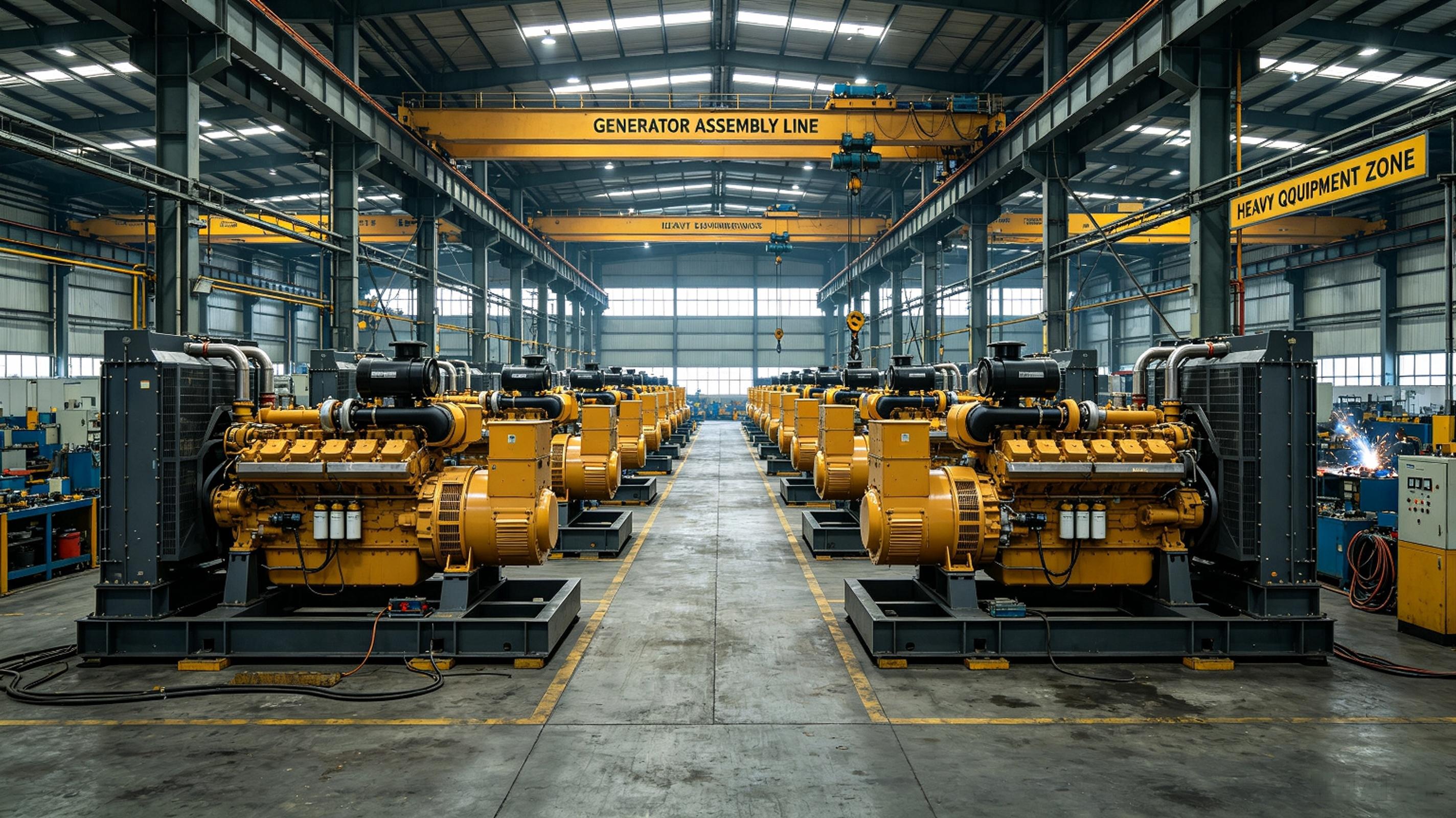
When sourcing an industrial generator supplier, the primary evaluation criterion must be their engineering expertise and strict component supply chain management. A high-performance heavy-duty diesel genset is not merely an engine and an alternator bolted together; it requires precision coaxial alignment and electrical parameter matching between world-class diesel engines (such as Cummins, Perkins, or Baudouin) and high-efficiency brushless alternators (such as Stamford or Marathon). Buyers should thoroughly assess prospective manufacturers across several key operational pillars:
First is the supplier's custom engineering capability. Industrial applications vary dramatically in their electrical demands. For instance, heavy motor starting in mining operations requires an alternator with exceptional transient voltage dip recovery and high block-load acceptance, whereas harsh desert, marine, or high-altitude environments demand custom cooling packages, tropicalized alternator windings, and specialized multi-stage air filtration. Suppliers that offer rigid, one-size-fits-all standard products cannot accommodate complex industrial job sites.
Second is power rating certification and continuous operating capability. Under ISO 8528 standards, industrial generators are classified into Emergency Standby Power (ESP), Limited-Time Prime Power (LTP), and Continuous/Prime Power (PRP). Elite suppliers provide accurate power derating calculations and transparent sizing guidance tailored to your operational load factor, ensuring the genset will not suffer thermal fatigue or premature wear during extended periods of continuous prime power generation.
Table 1: Industrial Generator Power Rating and Application Suitability Comparison
| Power Rating Standard | Operational Duty | Recommended Annual Operating Limit | Suggested Average Load Factor | Industrial Application Suitability |
| ESP (Emergency Standby) | Emergency backup during utility failure | < 200 Hours / Year | ≤ 70% | Non-critical auxiliary systems only |
| COP (Continuous Power) | Uninterrupted base-load generation | Unlimited (100% Continuous) | 100% Full Load | Remote off-grid long-term primary power |
| PRP (Prime Power) | Variable load primary power generation | Unlimited | 70% – 80% | Recommended for industrial factories and mines |
Another golden standard for evaluating an industrial generator manufacturer is inspecting their factory assembly shop floor and quality assurance protocols. Over decades of operation and thousands of running hours, even microscopic assembly errors can trigger catastrophic mechanical failures. For instance, if the coaxial alignment between the engine flywheel housing and the alternator rotor exceeds tight micrometric tolerances, severe vibration generated at high rotational speeds will cause bearing burnout, fastener shear, or crankshaft fatigue. Consequently, a capable assembly plant must invest in laser alignment tooling, automated paint lines, and precision electrical assembly stations.
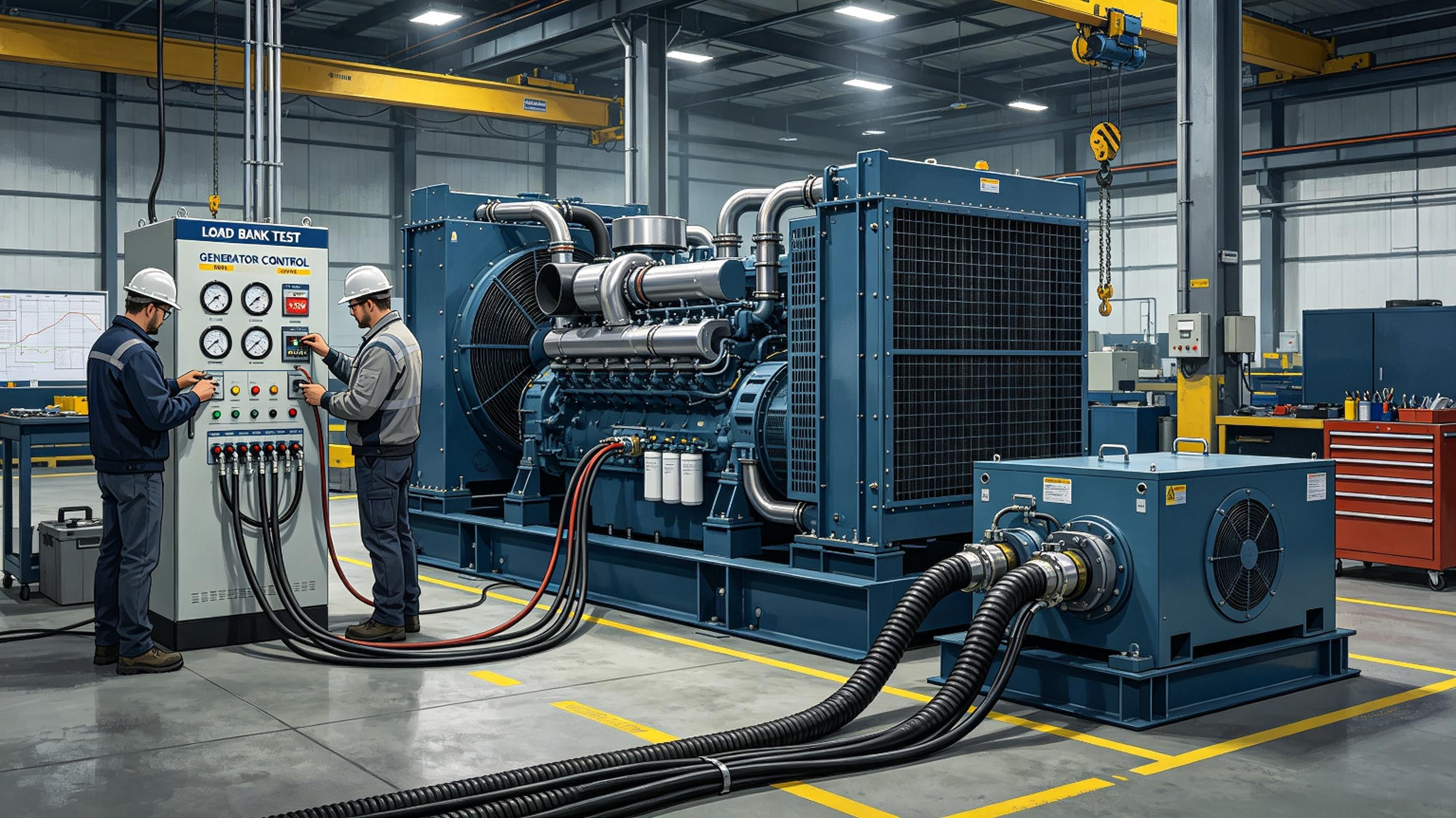
Furthermore, comprehensive factory acceptance testing FAT serves as the final barrier against product failure. Shipping an un-tested or partially tested generator set to a critical industrial site introduces unacceptable operational risk. A premier supplier maintains an advanced testing facility equipped with high-capacity resistive and reactive load banks. Before dispatch, every heavy-duty genset undergoes multi-hour testing across no-load, 25%, 50%, 75%, 100%, and 110% overload conditions, while automated SCADA systems log voltage stability, frequency regulation, harmonic distortion, exhaust temperatures, and oil pressure at millisecond intervals. Only units that pass every stringent testing benchmark are certified for export.
In modern industrial automation, a generator set is no longer an isolated mechanical machine; it operates as an intelligent node deeply integrated into facility microgrids and Building Management Systems (BMS). Therefore, procurement teams must evaluate the supplier's expertise in electrical automation and system integration.
A complete industrial backup power package typically includes digital microprocessor controllers (such as Deep Sea or ComAp), Automatic Transfer Switches (ATS), and multi-unit paralleling systems. Upon detecting a utility grid fault, the ATS initiates an automated start command, transferring the critical load smoothly once the generator establishes rated voltage and frequency. For heavy industrial facilities with massive power demands, single units are often insufficient, requiring the supplier to deliver robust multi-unit paralleling architecture. This allows multiple generators to synchronize frequency and phase angle over high-speed CANbus networks, providing scalable power capacity and redundant N+1 reliability. Delivering mature, user-friendly intelligent control integration distinguishes top-tier industrial generator manufacturers.
Industrial projects frequently encounter challenging environmental and regulatory conditions. Factories, healthcare facilities, and commercial complexes situated near residential zones are subject to strict municipal noise limits (often requiring ambient noise levels below 55–65 dBA at property boundaries). Simultaneously, harsh outdoor weather conditions—such as marine salt spray, desert sandstorms, extreme sub-zero temperatures, or tropical humidity—demand robust enclosure ingress protection (IP ratings).
To address these challenges, leading suppliers specialize in containerized generator solutions. By enclosing heavy-duty gensets, cooling packages, fuel tanks, control switchgear, and advanced acoustic baffling within standard ISO 20-foot or 40-foot high-cube containers, containerized units achieve superior weatherproofing, dust protection, corrosion resistance, and exceptional noise reduction. Container walls are lined with high-density fire-retardant mineral wool, intake and discharge paths utilize labyrinth acoustic louvers, and critical-grade exhaust silencers suppress engine pulses, ensuring full-load operation complies with the strictest international environmental standards.
Table 2: Industrial Generator Enclosure and Acoustic Attenuation Performance Comparison
| Enclosure Type | Ingress Protection (IP Rating) | Noise Level @ 7 Meters (dBA) | Environmental Adaptation & Engineering Features | Recommended Industrial Application |
| Open Skid Type | IP21 / IP23 | 95 – 105 dBA | No external enclosure; relies on dedicated indoor room | Dedicated indoor basement power rooms |
| Standard Silent Canopy | IP44 | 75 – 80 dBA | Stamped steel canopy, basic acoustic lining, internal muffler | Outdoor small-to-medium industrial sites |
| containerized generator | IP54 / IP56 | 70 – 75 dBA | 20ft/40ft ISO container, labyrinth baffles, dual rockwool, anti-corrosion | Heavy mining, oil fields, outdoor mega-plants |
In summary, choosing the right diesel genset supplier for industrial applications is a strategic decision requiring careful evaluation of manufacturing capability, assembly craftsmanship, testing protocols, automation integration, and custom acoustic engineering. A superior supplier provides not only reliable machinery but also comprehensive, lifecycle engineering support that eliminates power downtime risks and safeguards long-term industrial productivity.
As an experienced professional generator assembly factory, we remain committed to strict international quality standards, precision manufacturing, and customized engineering solutions for global clients. Whether your industrial project requires a heavy-duty diesel generator or a complex paralleled containerized generator power station, partnering directly with an established industrial generator supplier ensures optimal procurement value and rock-solid power security. Contact our engineering team today to request a custom technical proposal and tailored quotation for your upcoming project.


